

Caregiving: Taking care of others without losing yourself
There is something profoundly human about caring for an aging parent, an ailing spouse or someone losing their independence. But this commitment comes with many challenges.
Dr. Doris Clerc, Geriatric Psychiatrist,
Institut universitaire de gériatrie de Montréal
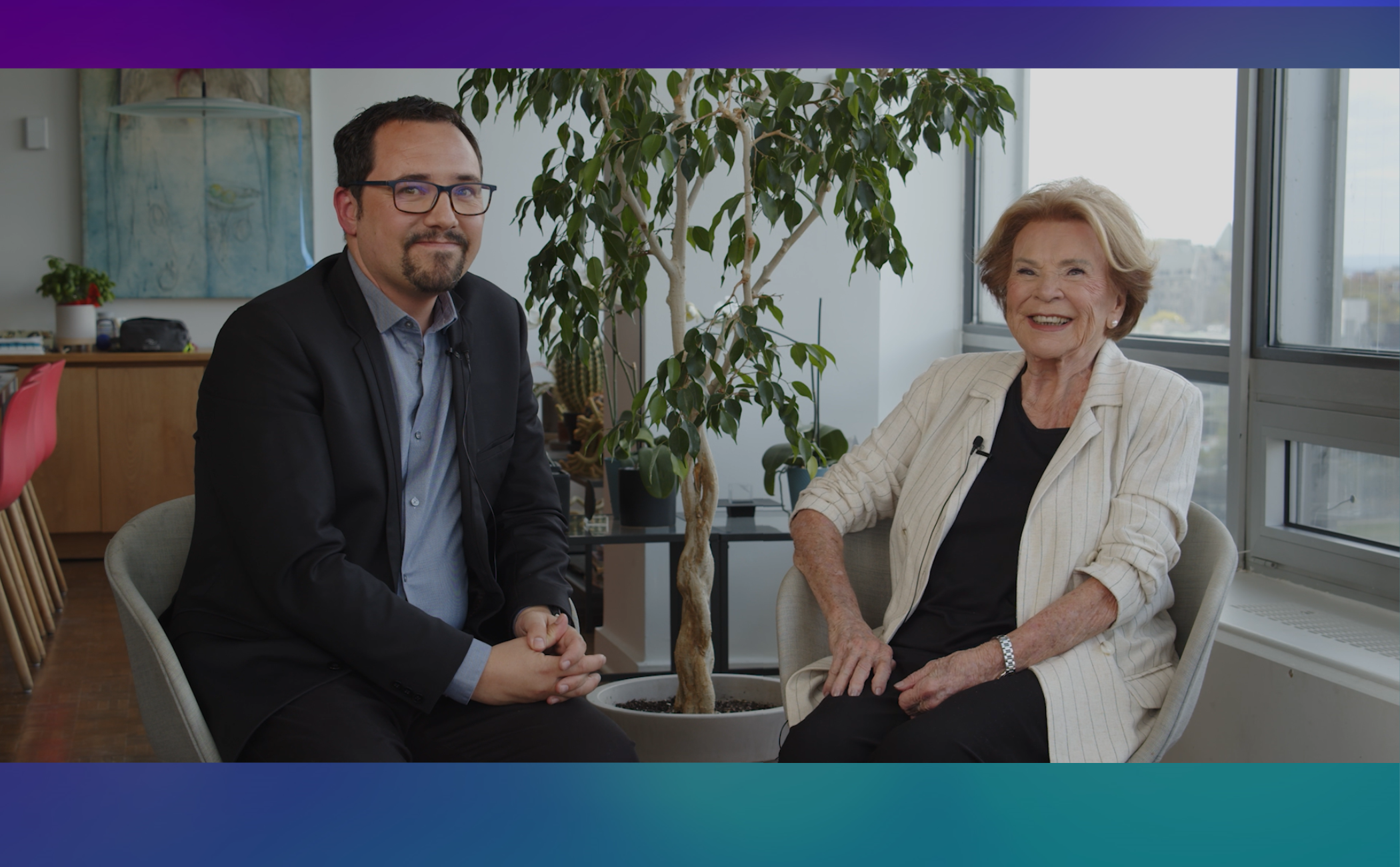
As part of the Chère Janette campaign, caregivers across Quebec shared everything they’ve experienced, from precious moments to fatigue, mental load and, sometimes, self-neglect. In conversation with Dr. Doris Clerc, a psychiatrist specializing in senior care at the Institut universitaire de gériatrie de Montréal, Janette Bertrand explores the highs and lows of caregiving along with ways to better support those who quietly play a crucial role in the lives of their loved ones.
Providing both practical and emotional support
Caregivers often take on a wide range of responsibilities, including scheduling medical appointments, preparing meals, helping with personal care, managing medications, and providing moral support. While their responsibilities may change as the care recipient’s needs change, their goal is always the same: to make life as good as possible for their loved ones.
Their commitment, often unseen, requires time, energy, great adaptability, and significant emotional investment. For many caregivers, the act of caregiving can be rewarding, especially when it is recognized and reflects deeply held values. Over the long term, however, it can become a gruelling grind.
Balancing your needs and those of others
Caregivers may find it harder to maintain a balance as responsibilities pile up. Gradually, they may grow frustrated, feel like they’re “trapped,” and risk experiencing physical burnout.
In her practice, Dr. Clerc has noticed that many caregivers put the needs of their loved ones before their own. “There’s a saying in our profession that caregivers are invisible patients—because no one thinks of asking them how they’re doing,” she explains.
Yet taking care of oneself is not a luxury. It’s an absolute prerequisite to caring for others over the long term. But caregivers need to feel justified in expressing their needs and in asking for help.
Avoiding caregiver burnout
According to Dr. Clerc, the first step is to recognize that the caregiver’s well-being is important too. She provides some practical advice:
- Recognize your own value
- Recognize your needs and emotions
- Dare to ask for help and use available services
There are various organizations across Quebec that caregivers can reach out to when they need access to respite care or help with supervision, bathing, cleaning, and more. “To find out what resources are available in your community, contact your CLSC. That’s the best place to start,” she says.
Supporting someone with dementia
Caregiving can become particularly complex in certain situations, such as when the care recipient has dementia or Alzheimer’s. In addition to the day-to-day care they provide, caregivers often find behavioural changes and memory loss emotionally difficult to cope with.
Dr. Clerc believes families should receive better support as soon as a diagnosis is made. She also offers encouraging words to those who find it hard not be recognized by their loved ones, reminding them that emotional memory is the last thing to go. Even when words and memories fade, the emotional needs and connections endure.
Keeping seniors at home
Such situations also raise a key question for many families: How long can loved ones be kept at home while ensuring their safety and a balanced life for everyone involved?
Many seniors say their greatest wish is to stay in their own homes. Yet, even with help, that’s not always possible.
Exploring nursing home options can lead to difficult conversations and leave some caregivers feeling guilty because they think they have betrayed their commitment to their loved ones. Dr. Clerc points out, however, that someone who is experiencing a loss of independence may need care that their family and friends are unable to provide.
While these are difficult decisions to make, emerging innovations are opening the door to new ways of supporting older adults and their loved ones. Smart apartments and connected technologies that enable remote monitoring are among the promising solutions being explored. What’s more, the Research Centre of the Institut universitaire de gériatrie de Montréal currently has various projects underway. In time, such advances could dramatically improve quality of life for many families.
Essential partners in the health-care system
As Quebec’s population continues to age, caregivers will play an increasingly vital role in the years ahead. By 2031, one in four Quebecers will be aged 65 or older1. This underscores the importance of recognizing caregivers’ contributions by expanding available resources and developing solutions that better meet the needs of older adults.
An overview of caregiving in Quebec
According to the Institut de la statistique du Québec, 21% of people aged 15 and over provide care or support to a loved one2.
Caregivers are a diverse group:
- They are of all ages and backgrounds.
- The support they provide may be ongoing or occasional.
- Some are not related to the person they support.
In this series
Explore other content from the Chère Janette campaign on topics that matter to you. Learn more
 |
 |
|
| Learn more about urinary incontinence | Learn more about chronic pain | |
 |
||
| Learn more about neurocognitive disorders |
The Foundation would like to warmly thank Québecor, presenting partner of this campaign, as well as Desjardins, partner of the video capsules. A special thank you to the Fondation Mirella et Lino Saputo for their generous contribution to the project.
The Fondation Institut de gériatrie de Montréal supports the development of practical solutions to the challenges associated with aging, while helping to improve quality of life for seniors.
Help us achieve our mission!
1-Observatoire québécois des inégalités (2025). La population aînée du Québec face à d’importantes inégalités en matière de revenu, de logement, de santé et de mobilité.
2-Institut de la statistique du Québec (2022). Les personnes proches aidantes au Québec en 2018.
Latest news.
A donation from Ébèn résidences pour aînés to benefit people…
Ébèn résidences pour aînés takes meaningful action to support people living with dementia who are long-term residents at the Institut…
Urinary incontinence and pelvic health: Let’s talk about…
With her usual candour and authenticity, Janette Bertrand speaks openly about a topic that is as common as it is…
Aging well with chronic pain: Advice from a geriatrician
Aging often comes with its share of discomforts, including osteoarthritis, stiffness, and persistent pain. But does that mean we should…